
13 Luxury Home Decor Ideas for a High-End Look
, by Plaza Home Decor, 7 min reading time
, by Plaza Home Decor, 7 min reading time
A luxurious room usually feels edited, not crowded. The best luxury home decor ideas rely on balance, texture, and a few well-chosen pieces that create calm, polished interiors without shouting for attention. That approach works especially well for homeowners who want a classic and elegant interior design style, whether the goal is a refined living room, a serene bedroom, or a more welcoming entryway. The sections below break down the look room by room, with practical choices that translate well in real homes.
Luxury home decor is less about buying the most expensive objects and more about creating a finished, cohesive interior. Materials matter, but so do proportion, restraint, and how each piece supports the next. A hand knotted wool rug, a top grain leather chair, or a lamp with a drum linen shade can feel far more luxurious than a room full of trendy accents. The best results come from clarity: choose a direction, edit hard, and let the room breathe.
Strong home decor starts with a calm foundation. Cream, taupe, charcoal, and warm white create a timeless backdrop that makes furnishings and finishes look more intentional. Then one or two accent tones can add contrast without breaking the mood. Muted colors keep interiors restful, which is a big part of the luxury effect: the room looks expensive because nothing feels loud or chaotic.
Soft neutrals work across styles, from traditional to contemporary. In a living room, a warm white sofa, taupe walls, and charcoal trim can create depth while still feeling light. The benefit is flexibility; these shades make it easier to swap art, pillows, or rugs later without starting over.
Use one accent color to define the room, not several competing ones. Deep olive, muted navy, or oxblood can add richness to home decor while keeping the palette composed. A single accent in a throw, chair, or artwork often looks more sophisticated than repeating many bright tones.
Luxury interiors often feel layered because they mix finishes with intention. Smooth stone, plush velvet, linen, warm wood, and brushed metal each bring a different visual weight. Texture adds richness without crowding a room, especially when the palette stays controlled. The tactile contrast also makes the space feel more inviting, which matters as much as visual polish.
A room with linen drapery, a wood table, and a metal lamp feels considered rather than staged. In luxury home decor ideas, that collected look is usually more compelling than matching everything. Think in contrasts: soft beside hard, matte beside reflective, natural beside tailored.
Empty space is part of the design. A console with one sculpture, a stack of books, and a table lamp often looks stronger than a surface packed with small accessories. Edit until each item has visual purpose, and the whole interior will read as more expensive.
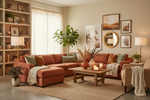
The living room usually sets the tone for the entire home, so it deserves the most attention. A central seating arrangement anchored by one standout piece creates structure immediately. Scale, symmetry, and lighting all contribute to the room’s polish, especially when the goal is a high-end look that still feels livable.
A sofa often does the heavy lifting in a luxury living room. A clean-lined silhouette, rich upholstery, or top grain leather upholstery can give the room presence without relying on extra decor. Pair it with matching or balanced chairs so the seating area feels intentional rather than random.
A hand knotted wool rug helps define the seating area and soften the room acoustically. Add a coffee table with some visual weight, then keep the styling restrained. A few books, a tray, and a vessel are enough to complete the composition while preserving the look.
Lighting is one of the fastest ways to shape luxury home decor because it changes how every material reads. Ambient, task, and accent lighting each serve a different role, but they work best together. Warm bulbs, sculptural fixtures, and layered placement can make ceilings feel taller, corners feel intentional, and the whole room feel more finished.
Chandeliers and other ceiling fixtures can act like jewelry for the room. A sculptural piece in the dining area or living room draws the eye upward and creates a stronger sense of scale. Choose a fixture that fits the room size; oversized can feel dramatic, but too small can cheapen the look.
Table lamps and sconces add warmth and dimension at eye level. A table lamp with a drum linen shade works especially well for a classic and elegant style, while wall sconces can frame art or brighten a hallway. Layered lighting usually makes interiors feel more luxurious than relying on one overhead source.
Art gives a room personality fast, but it works best when the selection feels curated. Fewer, better pieces create more visual breathing room than filling every wall. On shelves, consoles, and side tables, think about scale and spacing before adding anything else. The result should feel collected, not crowded.
One oversized artwork can define a room more effectively than several smaller pieces. In a living room or entryway, it provides focus and gives the interiors a gallery-like sense of order. Large art also helps make furniture feel properly scaled, which is a subtle but powerful luxury cue.
Smaller objects work best in balanced groups. Try a ceramic bowl, a candle, and a stack of books on a side table, or a pair of decor pieces beside a lamp on a console. This approach feels intentional and keeps the home decor from drifting into clutter.
The final layer is often what makes a room feel expensive on a budget. Hardware, mirrors, and window treatments can sharpen the whole interior without replacing major furniture. Repeating the same standards room by room—quality materials, clean lines, and restraint—creates consistency across the home. If a space feels busy, edit again. If it feels thin, add texture rather than more objects. The most effective luxury home decor ideas are usually the simplest ones, applied carefully.
Small upgrades can change the look more than expected. Cabinet pulls, a well-sized mirror, and tailored drapery instantly improve perceived quality. These details are especially useful in bedrooms, bathrooms, and entryways where first impressions matter.
Ask whether each accessory adds contrast, function, or scale. If it does not, remove it. That level of editing keeps interiors calm and helps the few chosen pieces stand out. It also gives the room a more expensive finish, even when the budget is modest.
The most polished homes usually follow the same logic everywhere: a controlled palette, layered textures, and one clear focal point per room. Whether the project involves a living room refresh or a full-home update, consistency matters more than quantity. Trust the overall look, refine it slowly, and let each room support the next.


Subscribe to our emails