
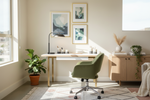
Home Office Design Ideas for a Stylish, Functional Space
, by Plaza Home Decor, 7 min reading time
, by Plaza Home Decor, 7 min reading time
A home office works best when the room supports the way work actually happens: quiet focus, quick access to supplies, and enough breathing room to avoid feeling boxed in. Smart home office design starts with location, then moves through office layout, furniture, lighting, storage, and style in that order. That sequence helps a workspace feel polished without sacrificing comfort. The goal is not just a nice-looking setup, but a functional home office that makes daily tasks easier and more pleasant.
The room itself can make or break concentration, so the best choice is usually the one that offers the least interruption. A spare bedroom gives privacy and a clean separation from household traffic, while a corner in a living room may work better for short work sessions or lighter use. Alcoves and multipurpose spaces can be practical too, especially if outlets, natural light, and noise levels are manageable. A home office is easier to use long term when it sits away from busy paths, loud appliances, and constant movement.
Accurate measurements prevent the most common home office regret: furniture that looks right online but feels cramped in real life. Measure wall length, depth, doorway clearance, and any trim or radiators before choosing pieces. Then map out where the desk, chair, and storage will sit so the office layout allows room to stand, turn, and open drawers comfortably. A quick checklist helps: wall width, usable depth, door swing, outlet locations, and chair pull-back space. That planning step makes a functional home office far easier to live with.
The right office desk depends on how much surface area and equipment the workstation really needs. A laptop-only setup can stay compact, while multiple monitors, paper files, or creative tools require a larger top and more depth. Office Chair comfort matters just as much, since long hours expose any weak support quickly. Adjustable height, lumbar support, and proper seat depth make a noticeable difference in posture and focus. For different home office ideas, compact desks, built-ins, and standing options each have a place, but fit and comfort should outrank trends.
Natural light can lift energy, improve mood, and make the home office space feel more open and appealing. A layered lighting plan usually works best: overhead lighting for general brightness, task lighting for focused work, and window placement that brings in daylight without creating distractions. Glare on a screen, harsh shadows, and reflections can quietly drain productivity, especially in a modern home office with glossy surfaces. Simple fixes help a lot, including adjustable lamps, blinds, a lamp with drum linen shade, mirrors to bounce light, and brighter bulbs where needed.
Before buying shelves and bins, decide what needs to stay visible, what should stay within arm’s reach, and what can be hidden away. That approach keeps the workstation organized without overcomplicating it. Bookcases, Cabinets & Shelves are useful for books and display items, cabinets hide bulkier supplies, drawers handle everyday tools, and bins corral loose cords or paper. Good storage follows workflow rather than simply filling empty wall space. The result is less clutter, faster access to essentials, and a home office design that feels calm instead of crowded.
A well-planned office layout reduces friction throughout the day. Separate zones for computer work, paperwork, reading, and video calls can make a home office feel more organized, even in a small footprint. Open layouts offer flexibility and a lighter visual feel, while tucked-away setups help reduce distractions for people working from home in active households. The best arrangement usually keeps the most-used items closest to the desk and less frequent tasks farther away. Small layout decisions shape daily habits more than most decor choices ever will.
Decor gives a workspace character, but it works best when it supports the room instead of competing with it. A restrained color palette keeps the area cohesive, while artwork, plants, woven textures, and a few well-chosen accessories add warmth. A modern home office does not have to feel sterile; even classic and elegant style can feel current with clean lines and thoughtful color choices. For homeowners who want home office ideas that feel easy to copy, start with one focal point, then layer in accents that match the mood and the rest of the home.
Compact rooms, shared areas, and awkward corners need smarter tradeoffs, not more stuff. Wall-mounted storage, floating desks, filing cabinets and foldable pieces free up floor space and make a small home office feel more intentional. Light paint colors can open up the room visually, and mirrors help amplify brightness from windows or indoor lighting. In tight spaces, every item should earn its place, whether it supports storage, comfort, or daily workflow. The best small-space solutions keep the room usable first and stylish second, though the two can still work together.
Visible cords and scattered devices can make even a well-designed office feel messy. A cleaner workstation usually starts with simple habits: use cable clips, keep chargers in one drawer, and give each device a fixed home. Power access matters too, especially if the right desk sits far from outlets or holds multiple monitors and accessories. Monitor placement should reduce neck strain, while nearby storage keeps phones, tablets, and headphones from cluttering the surface. Small tech upgrades create a calmer desk and a more efficient routine with very little effort.
Comfort details matter most when the home office is used for hours at a time. An ergonomic footrest, a softer chair pad, or a small pause area with an arm chair can make long sessions feel more manageable. Some people also benefit from a quiet corner with a table lamp and a few minutes of visual rest away from the screen. These touches support endurance, not just style. Better comfort often leads to better focus, less fatigue, and a routine that feels easier to repeat every day.
Before buying anything, confirm the basics: room size, layout, desk fit, chair comfort, lighting plan, storage needs, and overall style direction. It helps to mentally place each item in the space and imagine moving through the room during a normal workday. If the plan feels tight on paper, it will usually feel tighter in person. A quick readiness check now prevents expensive adjustments later and gives the home office design process a clearer path forward.
Pick the room that offers the best mix of privacy, natural light, manageable noise, and usable floor space. The best option supports focus without interfering with household movement or daily routines.
Every functional home office should include a desk, a comfortable chair, effective lighting, storage, and a clear work surface. Those essentials support both productivity and comfort.
Use a limited color palette, smart storage, and a few personal accents such as artwork or plants. Simple choices make the space feel intentional instead of crowded.
Facing a window can bring in natural light and a better view, but glare and distractions may make another orientation better. Testing both options is the easiest way to find what works.
The strongest home office design balances style, comfort, and practicality in equal measure. Start with location and layout, choose furniture that fits real work habits, then add lighting, storage, and decor that support the room instead of fighting it. A stylish space is easier to enjoy, but a functional home office is what keeps it useful day after day. Focus on the essentials first, and the final result will feel more polished, more comfortable, and much easier to work in.


Subscribe to our emails